
| 09:30 | Coffee | |
|---|---|---|
| 09:50 | Welcome by Bas Kooijman | |
| 10:00 | Jean-Christophe Poggiale: Marine bacteria-virus dynamics in a chemostat | |
| 10:45 | Olivier Maury: A DEB-based size-spectrum model of ecosystems including life history diversity | |
| 11:30 | Marianne Alunno-Bruscia: What does the DEB model enlighten on the physiology of a marine bivalve, Crassostrea gigas? | |
| 12:15 | Lunch near VU restaurant (ground floor Science Building) in G-076 | |
| 13:15 | Jaap vd Meer: Seasonal timing of reproduction in the bivalve Macoma balthica: a model study of fitness consequences | |
| 14:00 | Cédric Bacher: The carrying capacity of oyster cultures as predicted by the coupling between a DEB model for oysters and a classical primary production model | |
| 14:45 | Tea | |
| 15:00 | Alain Franc: Plant communities between permanence and diversity | |
| 15:45 | Tiago Domingos: DEB theory as a paradigm for the integration of thermodynamics with the biological and the social sciences | |
| 16:30 | General discussion | |
| 17:00 | Reception in the "tegenstelling", Science Building |
This symposium is on the very special occasion of a series of three related graduations on
new developments in Dynamic
Energy Budget (DEB) theory for metabolic organisation. Young
scientists like these promising talents determine the future of
scientific research; their
graduations fit into an unfolding international research
program. In combination with the two related
graduations on DEB theory in Nov 2006 at the VU and the
graduation on economic
applications of DEB theory in Lisbon in Feb 2007, this level of
output of the DEB research program not only illustrates the
increasing impact of the theory on science, but also its capacity
to unify topics that seemed to be unrelated in the past. Today's
contributions further demonstrate the versatility of theory on
metabolic organisation. Zeven excellent scientists will inform us
about various different developments in the context of DEB theory,
and about very practical applications of the theory in different
corners of science. At first sight, these contributions
occasionally seem to be very different, but from an abstract point
of view, they have a lot in common. The recognition of these
commonalities help to push the boundaries of our understanding of
the problem, and allows rapid progress by making efficient use of
the substantial effort that has already been invested in developing
DEB theory, which has contributions from many scientists of various
disciplines. The successful Gordon conferences on the metabolic
basis of ecology in 2004,
2006
and 2008
show that the insight that metabolism is at the basis of ecology is
growing in general; our symposium today will demonstrate that a
coherent and consistent theory on this topic, with firm roots in
physics, chemistry, biology and earth sciences speeds up insight
considerably, well beyond the boundaries of ecology.
 A model describing an interaction between marine bacterial
populations and a virus in a chemostat environment is
presented. Three bacterial populations are described, a subceptible
one, an infected one and a resistant one. Their growth is limited
by a carbon substrate that is explicitly represented in the
model. The bacteria-organic matter interaction is formulated with
a Monod model. The anaysis of the dynamics is presented and the
coexistence of resistant and susceptible populations is discussed
by considering the effects of the virus. The extension of the model
to the DEB model will be discussed and the analysis method provided
in this talk may be applied to the DEB extension.
A model describing an interaction between marine bacterial
populations and a virus in a chemostat environment is
presented. Three bacterial populations are described, a subceptible
one, an infected one and a resistant one. Their growth is limited
by a carbon substrate that is explicitly represented in the
model. The bacteria-organic matter interaction is formulated with
a Monod model. The anaysis of the dynamics is presented and the
coexistence of resistant and susceptible populations is discussed
by considering the effects of the virus. The extension of the model
to the DEB model will be discussed and the analysis method provided
in this talk may be applied to the DEB extension.
 I will discuss a size-structured DEB model of the energy flow through
marine ecosystems, based on established ecological and physiological
processes and mass conservation principles. The model represents the
transfer of energy in both time and body weight (size) in marine
ecosystems and includes size-based opportunistic trophic interactions,
competition for food, allocation of energy between growth and
reproduction, somatic and maturity maintenance, predatory and
starvation mortality. The model outputs the dynamic size-spectrum of
marine ecosystems in terms of energy content per weight class as well
as many other size-dependent diagnostic variables such as growth rate,
egg production or predation mortality. In stable environmental
conditions, the model converges toward a stationary linear log
log size-spectrum with a slope equal to 1.06, which is consistent with
the values reported in empirical studies. In some cases, the
distribution of the largest sizes departs from the stationary linear
solution and is slightly curved downward. A sensitivity analysis to
the parameters is conducted systematically. It shows that the
stationary size-spectrum is not very sensitive to the parameters of
the model. The numerical effects of temperature and primary production
variability on marine ecosystems size-spectra are also discussed,
I will discuss a size-structured DEB model of the energy flow through
marine ecosystems, based on established ecological and physiological
processes and mass conservation principles. The model represents the
transfer of energy in both time and body weight (size) in marine
ecosystems and includes size-based opportunistic trophic interactions,
competition for food, allocation of energy between growth and
reproduction, somatic and maturity maintenance, predatory and
starvation mortality. The model outputs the dynamic size-spectrum of
marine ecosystems in terms of energy content per weight class as well
as many other size-dependent diagnostic variables such as growth rate,
egg production or predation mortality. In stable environmental
conditions, the model converges toward a stationary linear log
log size-spectrum with a slope equal to 1.06, which is consistent with
the values reported in empirical studies. In some cases, the
distribution of the largest sizes departs from the stationary linear
solution and is slightly curved downward. A sensitivity analysis to
the parameters is conducted systematically. It shows that the
stationary size-spectrum is not very sensitive to the parameters of
the model. The numerical effects of temperature and primary production
variability on marine ecosystems size-spectra are also discussed,
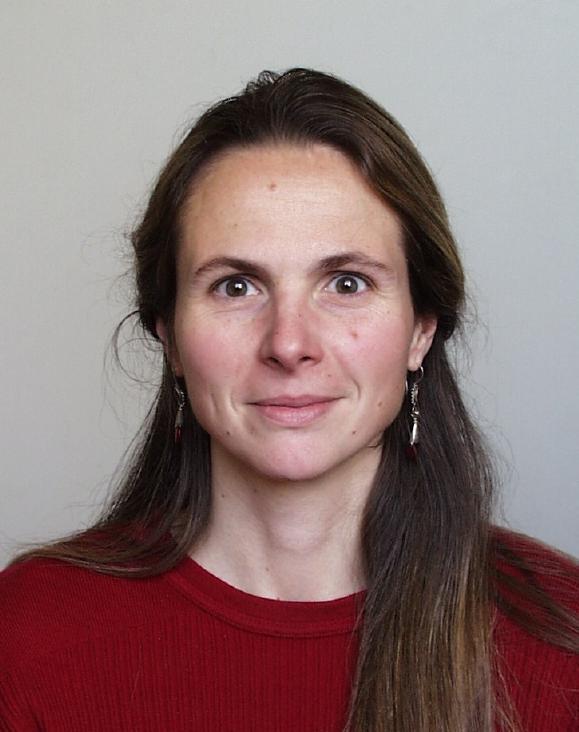 Marine bivalves, and especially the Pacific oyster Crassostrea gigas,
are economically important in French aquaculture. In several shellfish
areas, oysters are then the dominant species in terms of biomass and
production. In this context, there is a need for modelling tools to
understand ecological processes in shellfish ecosystems and to help
sustainable management of the oyster farming. Over the last 15 years,
numerous energetic models that explain growth of bivalves according to
the environment (temperature, food), have been developed. Recently, a
model based on the DEB theory (Kooijman, 2000) has been successfully
built up for the Pacific oyster (Pouvreau et al., 2006); some
parameters of this DEB model have been modified ever since (Bourles et
al. in prep., ICSR2007).
Marine bivalves, and especially the Pacific oyster Crassostrea gigas,
are economically important in French aquaculture. In several shellfish
areas, oysters are then the dominant species in terms of biomass and
production. In this context, there is a need for modelling tools to
understand ecological processes in shellfish ecosystems and to help
sustainable management of the oyster farming. Over the last 15 years,
numerous energetic models that explain growth of bivalves according to
the environment (temperature, food), have been developed. Recently, a
model based on the DEB theory (Kooijman, 2000) has been successfully
built up for the Pacific oyster (Pouvreau et al., 2006); some
parameters of this DEB model have been modified ever since (Bourles et
al. in prep., ICSR2007).
The resulting new version of the oyster-DEB model was tested in various environments where C. gigas is cultured (e.g. Arcachon Bay). In Arcachon Bay, datasets which were used to test the model consist in a 18-year series (1988-2005) of oyster growth data and environmental data. Forcing variables of the model are water temperature and phytoplankton identification (number of cells per litter by species). Simulations of the model are compared to observed growth data and we discuss whether they fit accurately observations, with a special emphasis on the effect of quality of the phytoplankton species. We show that from year to year the model successfully predicts the growth and reproduction of oysters, as well as the timing of spawning. The only parameter that varies among simulations is the halfsaturation coefficient (XK) because of inter-annual variations in the algae species, i.e. in the diet composition for oysters. Some algae species in Arcachon Bay are likely not well assimilated by C. gigas. This result could partly explain the growth variability of oysters that is reported among French shellfish areas.
References:
Kooijman S.A.L.M. 2000. Dynamic energy and mass budgets in biological systems. Cambridge University Press, Cambridge.
Pouvreau, S., Y. Bourlès, et al. (2006). Application of a dynamic energy budget model to the Pacific oyster, Crassostrea gigas, reared under various environmental conditions. J. Sea Res. 56: 156-167.
 Many organisms have to cope with seasonally varying environmental
conditions and resource availability. The annual timing of
reproduction in such environments may have large fitness
consequences. Examples are insectivorous birds that are only able to
raise their offspring during the annual peak in caterpillar abundance,
larval amphibians requiring pools of water which are only present
during a short period of the year, and larvae of marine invertebrates
that profit from the spring peak in phytoplankton abundance. Indeed,
most scholars have studied the fitness consequences of the timing of
reproduction in terms of the short-term prospects of the offspring.
Many organisms have to cope with seasonally varying environmental
conditions and resource availability. The annual timing of
reproduction in such environments may have large fitness
consequences. Examples are insectivorous birds that are only able to
raise their offspring during the annual peak in caterpillar abundance,
larval amphibians requiring pools of water which are only present
during a short period of the year, and larvae of marine invertebrates
that profit from the spring peak in phytoplankton abundance. Indeed,
most scholars have studied the fitness consequences of the timing of
reproduction in terms of the short-term prospects of the offspring.
Generally speaking, it is however not immediately obvious why emphasis should be put on the earliest life phase of the offspring. Adults themselves may profit from the food peak and by these means increase total reproductive output. It might also be more profitable for the young to experience the food peak at a later stage and a larger size. Here we apply a modelling approach based on first principles to examine the optimal timing of reproduction in a seasonal environment.
A size-structured population model is formulated where the individual is described by means of the standard Dynamic Energy Budget (DEB) model. The state of each model individual is given by its structural size, its reserves and its maturity level (for juveniles) or cumulative reproductive investment (for adults). Maintenance, growth and maturation and/or reproduction are paid from the reserves and when the amount of reserves is insufficient to pay the maintenance, the individual dies. Additional background mortality is assumed. Reserve dynamics depend upon food abundance. Reproductive investments are released once a year. All rates depend upon temperature in a similar fashion. All individuals within a "population" have the same energy budget parameters and follow the same timing-of-reproduction strategy. Individuals thus arrive in annual cohorts and population dynamics is a matter of bookkeeping of the fate of each annual cohort (in terms of numbers and state of the constituent individuals). The environment is assumed to be a pseudo-chemostat, which means that food flows in and out of the system, but the animals do not. The food concentration of the inflow follows a fixed seasonal pattern, with a single spring peak. The dynamics of food abundance is thus a matter of inflow, grazing and outflow. Temperature varies seasonally.
Evolutionary dynamics is studied by means of an Adaptive Dynamics approach. By this we mean that we consider a resident population that has settled in steady-state and then introduce mutant populations that do not affect the food environment and that show a small change in timing-of-reproduction strategy in comparison with the resident population. We examine the instantaneous population rate of increase of the mutant to see whether it can invade the resident population.
By using a rigorous energy budget model our approach thus includes trade-offs at the organismal level of a specific "timing-of-reproduction" strategy, something that is usually neglected in life-history optimization studies. Our study also includes possible feedback effects through environmental change (i.e. food availability), and hence takes a game-theoretical point of view. The strategies that other players in the field follow are taken into account.
The particular system we have in mind is that of a marine bivalve species Macoma balthica, which is very abundant in the Dutch Wadden Sea. DEB parameters for this species have recently been estimated.
 Sorry, but abstract are not available.
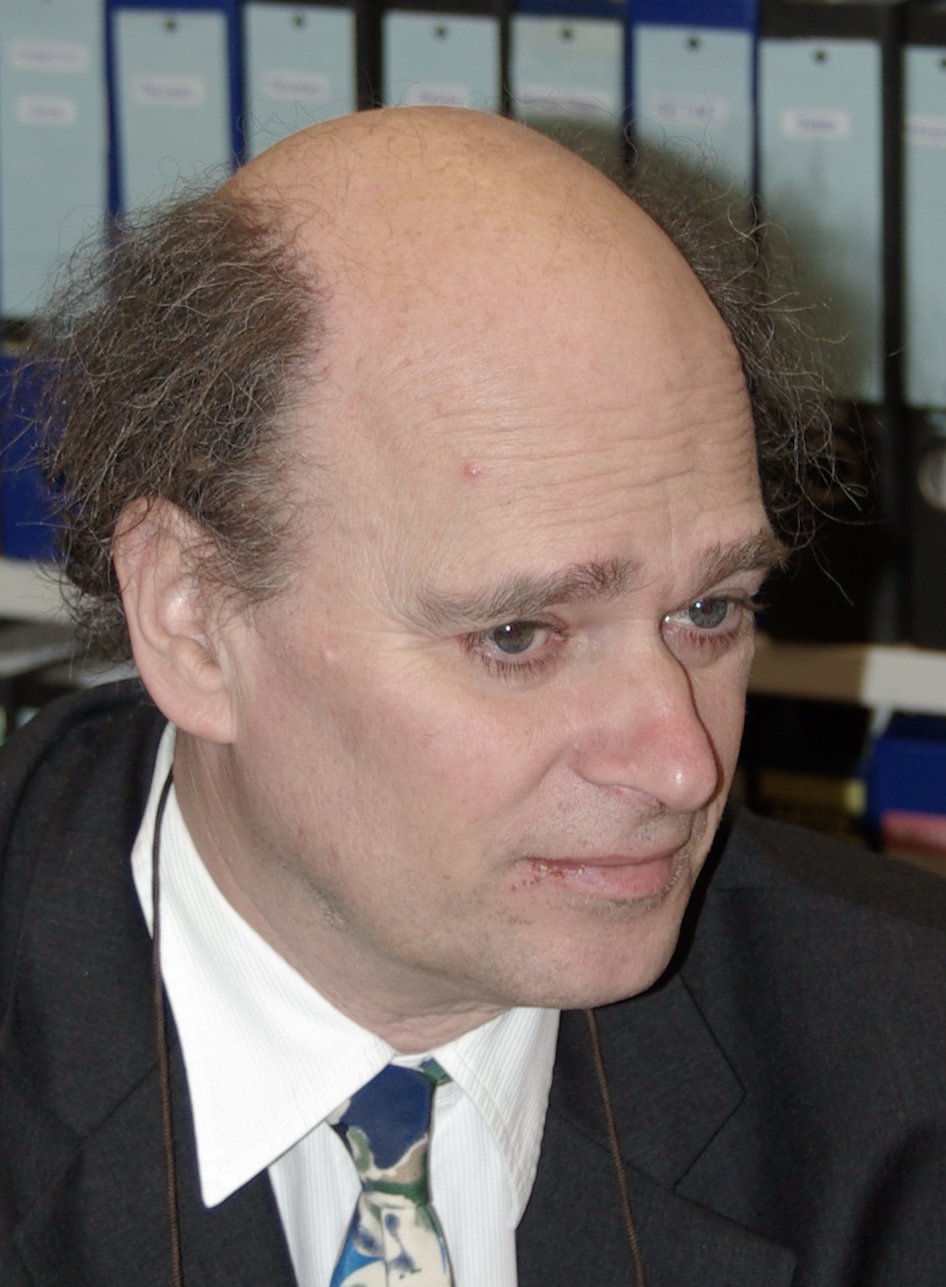
Modelling at the same time diversity of organisms and permanence of population assemblage into communities has been a holy grail in community ecology since its beginnings. Plant communities classically are studied as assemblages of species. Recently, a few teams have studied them as assemblages of functional traits, with trait definition at community level. However, a plant is itself a non random assemblage of several traits, as an outcome of co-evolution, shaped by biotic interactions. Here, we present a community assembly model, starting with Law (1998) ideas, incorporate plant description as trait assemblage, and show that permanence of community structure is attained much more easily in such a way than through assembly of whole phenotypes. The formal analogy with genetic algorithm of co-evolution is emphasized and discussed, suggesting a way to study the role of history in shaping assemblages.
 Thermodynamic constraints must be obeyed, but are not enough to
build theories in biological and social systems. This is the
underlying cause for two major divisions in two scientific areas:
Ecology and Economics. In Ecology, it is the division between
Ecosystem and Physiological Ecology, where the accounting units are
energy and mass flows, and Population and Community Ecology, where
the accounting unit is number of individuals. In Economics, it is
the division between Ecological Economics (a clear minority), based
on energy and mass flows, and Neoclassical economics (the
mainstream), based on utility and profit. Based on recent work
establishing a formal axiomatic structure for DEB theory (Sousa et al., 2008, From
empirical patterns to theory: A formal metabolic theory of life,
Transactions of the Royal Society of London B, in press) we
show how DEB theory achieves the integration of Thermodynamics with
Biology, pointing the way to an analogous achievement in the social
sciences.
Thermodynamic constraints must be obeyed, but are not enough to
build theories in biological and social systems. This is the
underlying cause for two major divisions in two scientific areas:
Ecology and Economics. In Ecology, it is the division between
Ecosystem and Physiological Ecology, where the accounting units are
energy and mass flows, and Population and Community Ecology, where
the accounting unit is number of individuals. In Economics, it is
the division between Ecological Economics (a clear minority), based
on energy and mass flows, and Neoclassical economics (the
mainstream), based on utility and profit. Based on recent work
establishing a formal axiomatic structure for DEB theory (Sousa et al., 2008, From
empirical patterns to theory: A formal metabolic theory of life,
Transactions of the Royal Society of London B, in press) we
show how DEB theory achieves the integration of Thermodynamics with
Biology, pointing the way to an analogous achievement in the social
sciences.